


The Ernan Craft Forty hours of
sun and wind
Nothing is rolled, nothing is rushed. What the weather gives, the hands judge.
The craft of Ernan White Tea (二南白茶) is how its family has made Fuding white tea for four generations: leaf picked by hand, withered in sun and mountain wind for more than forty hours, dried, sealed for about a year, then pressed into cakes and sealed again. Nothing is rolled and nothing is fired into shape.
The least made of all teas
Fuding sits between mountains and sea in northern Fujian, its gardens at 500 to 800 metres, wrapped most mornings in cloud. Here the leaf is picked, withered and dried — and that is all. No rolling, no firing into shape. The craft is in what is not done, and in the judgment of when.
Because so little is done to it, white tea keeps changing in the cake for decades: the grass and flowers of the first years turn, slowly, toward honey, dried fruit and jujube. That is why the house keeps its vintages, and why aged white tea is collected.


Picking. Early picking, tender picking, clean picking. Buds whole and uniform, taken gently, carried in bamboo baskets and moved in bamboo crates — never crushed, never left to heat.
Withering. The house doctrine is sun-withering, and it is absolute: the leaf is spread on bamboo trays and withered in sun and mountain wind for more than forty hours, turned and adjusted by hand throughout. “Withering must reach at least forty hours — it is the guarantee of white tea quality.”
Pressing, twice transformed. Finished leaf rests sealed for around a year before it is pressed. At the moment its fragrance peaks it is steamed, pressed into cakes, dried again, and sealed again for a second transformation. Some cakes take a light charcoal baking, which softens the tea toward a jujube sweetness as it ages.
The judgment. How long a leaf is left on the stem changes how a cake will taste in ten years. That judgment is the family’s real inheritance.


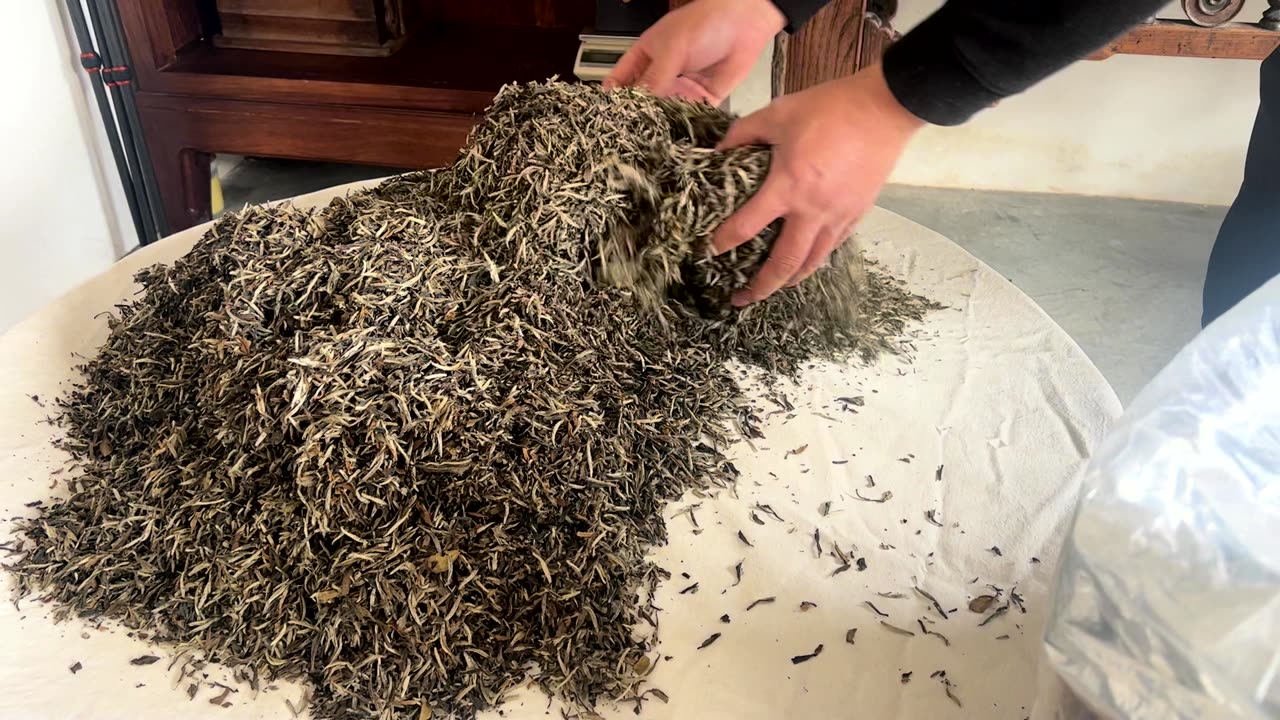
Turned by hand, hour after hour
Silver needle on the tray: the leaf is moved so that every bud meets the air. Forty hours is the minimum; the hands decide the rest.
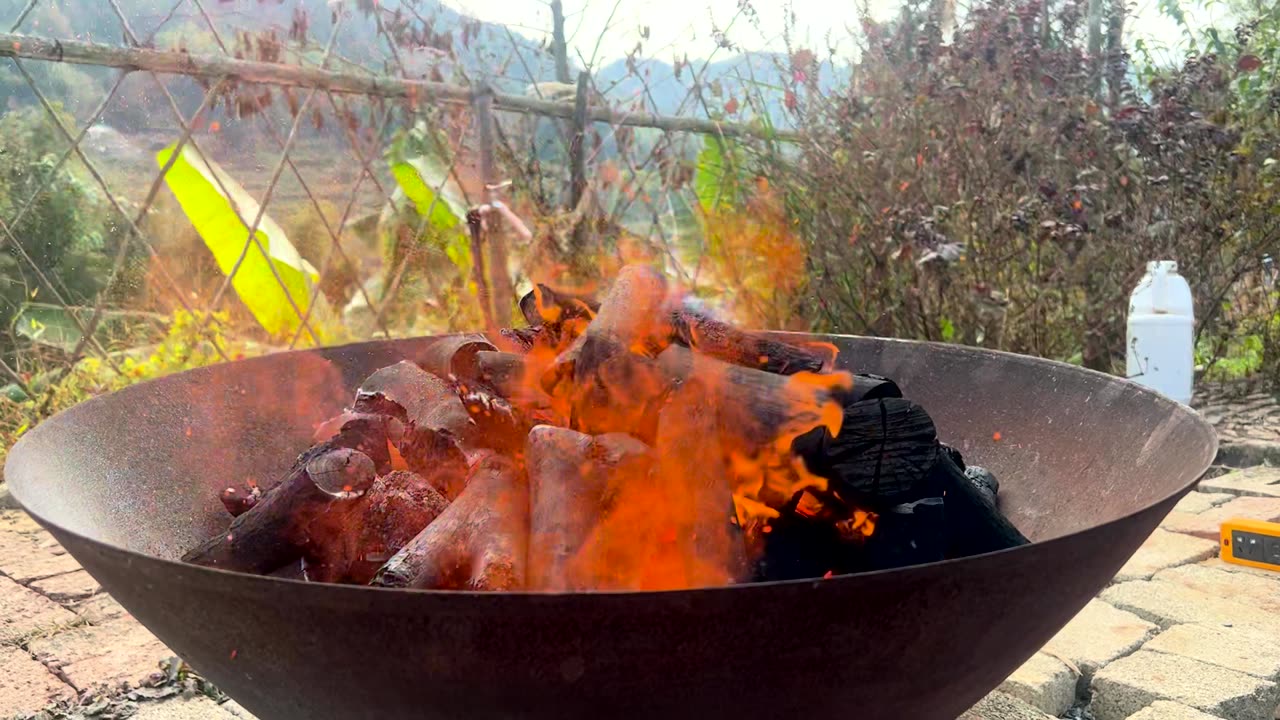
A little charcoal, for some cakes
A few cakes take a light charcoal baking before they are sealed away. It softens them toward a jujube sweetness that deepens for years.
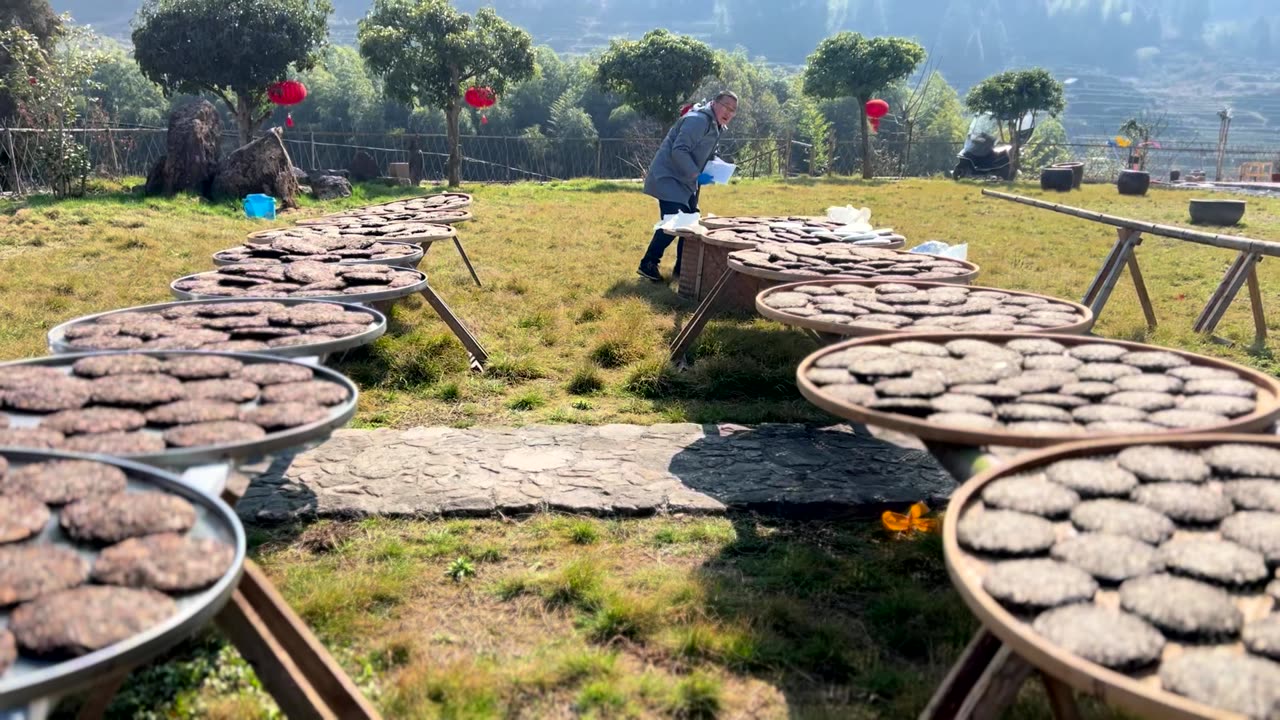
Cakes drying in the field after pressing.
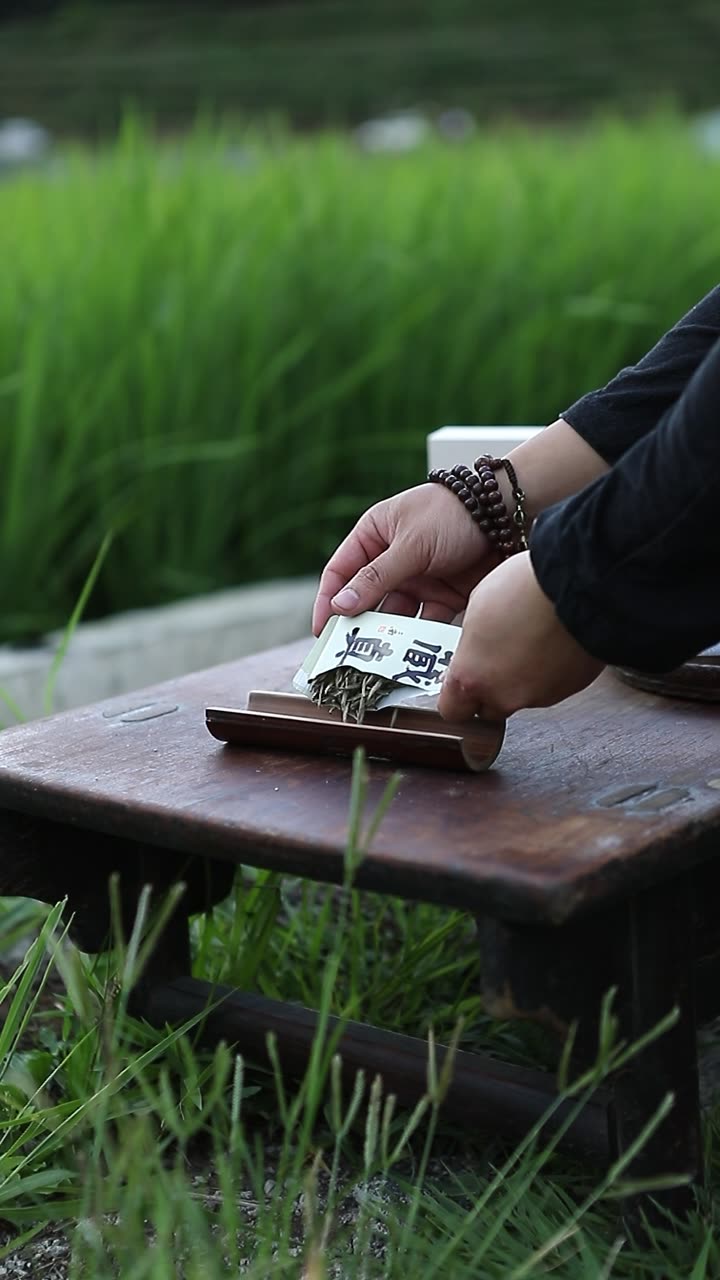
Withered leaf, judged by hand.
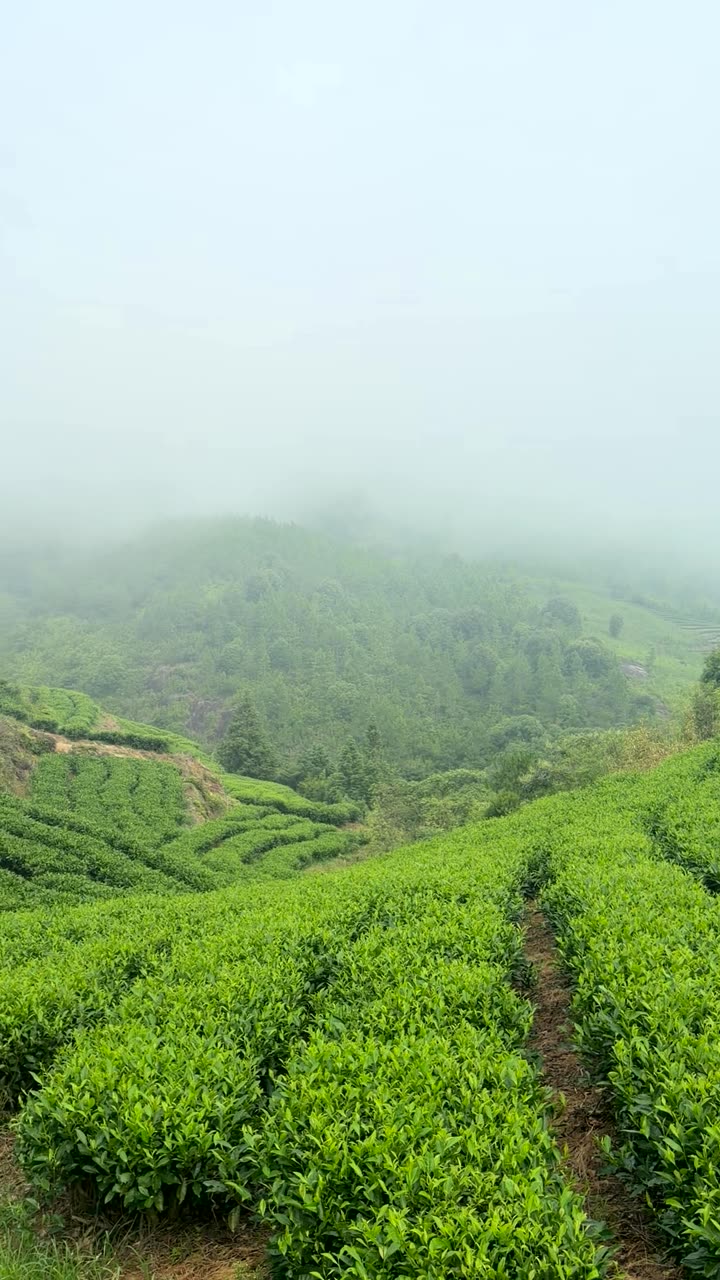
The gardens the leaf comes from.
Withering: forty hours and more
Withering is where white tea is made. Fresh leaf is spread thin on round bamboo trays and left to lose its water slowly in sun and moving air. As it dries it changes: the grassy smell of the cut leaf fades, a fruit and flower sweetness comes up, the leaf darkens a little at the edges while the down on the bud stays silver. Nothing is done to hurry it.
The house rule is sun-withering for more than forty hours, and it does not bend. Many white teas are withered indoors or finished with heat to save time; the family’s position is that forty hours is the floor, not the target. Through those hours the trays are turned, moved in and out of the sun, and judged by touch and smell. Weather decides how long beyond forty it takes. When the leaf is ready it is dried and sorted by hand.
Sealed a year, pressed, sealed again
Finished leaf is not pressed at once. It rests sealed for around a year, and the family waits for the moment its fragrance peaks. Then it is steamed just enough to soften, pressed into cakes, dried again, and sealed again for a second transformation. Some cakes take a light charcoal baking before they are put away; it softens them toward a jujube sweetness that deepens for years.
This is the double transformation the house speaks of: once as loose leaf, once in the cake. It is slower than pressing fresh leaf, and the family would not do it any other way. Loose teas such as the Silver Needles and the wilderness White Peony Kings are simply kept sealed, unpressed.
Four generations
Ernan (二南), born Kong Nairong, is the fourth generation of tea makers in his family. In the last years of the Qing dynasty his great-grandfather made tea his livelihood in the mountains of Fuding, and the trade passed from hand to hand: grandfather, father, son. He grew up on the tea mountain, following his father and grandparents through the picking seasons before he could carry a full basket. His father watches the leaf dry in the withering room at West Kun, beneath scrolls that read: know the true gentleman; revere the ancient as the heart.
What passes down is not a recipe. It is judgment: how long a leaf is left on the stem changes how a cake will taste in ten years, and no one can write that down. The story tells the family’s history in full.
Chan in the work
For twenty years before the house was founded, Ernan lived in robes: study, meditation, calligraphy, and always tea. When he came down the mountain in 2014, the monastery’s quiet and four generations of craft came down together. In the work it shows as patience. Withering is not hurried; a year of sealing is waited out; a tray is turned when the leaf asks, not when the clock does.
“Tea belongs to everyday life. Art is an expression of the true heart. Chan is the foundation beneath it all.” The same hands press the tea and write the names on the wrappers. See Chan tea in the glossary.
Three ways
The short version. Water, vessels, cold brew and aged cakes are in How to brew white tea.
Wake 5g of leaf with water just off the boil, pour off, then steep briefly — thirty to forty-five seconds for the first infusion, shorter after.
Fifteen to twenty-five grams in a large pot, hot water straight over, refilled through the day. Aged white tea holds its sweetness from morning to night.
For cakes three years and older: simmer about 20g briefly from cold water and let it settle. Deep, dark and sweet — the winter method.


Two seasons, two temperaments
Teas of spring
Grass and flower aromas; fresh and bright. For mornings and summer.
Teas of autumn
Rich, full, rounded. For afternoons, and for boiling in winter.
Asked about the craft
How is Ernan white tea made?
Picked by hand (early, tender, clean), withered in sun and mountain wind for more than forty hours, dried and sorted, then sealed for about a year. At the moment its fragrance peaks it is steamed, pressed into cakes, dried and sealed again. Nothing is rolled or fired into shape.
Why forty hours of withering?
“Withering must reach at least forty hours: it is the guarantee of white tea quality.” The long, slow wither in sun and wind is what turns the leaf from grassy to sweet. Forty hours is the minimum; the weather and the hands decide the rest.
Why are the cakes sealed for a year before pressing?
So the tea transforms twice: first as loose leaf, then again in the cake. The cake is pressed at the moment the loose leaf’s fragrance peaks, and goes on changing in the wrapper for decades.
More questions, on storing, water and visiting, are answered in the FAQ.