

The Story The monk who
came down the mountain
Born Kong Nairong in Fuding, 1980. Seventy-fourth generation of Confucius. Twenty years in robes. Then tea.
Ernan (二南), born Kong Nairong, comes from a family of tea makers. In the last years of the Qing dynasty his great-grandfather made tea his livelihood in the mountains of Fuding — the county China still calls the home of white tea. The trade passed from hand to hand: grandfather, father, son. He grew up on the tea mountain, following his father and grandparents through picking seasons before he could carry a full basket.
The family house stands in West Kun village, known as the first village of Confucius’s descendants in the south. Over its gate four characters are carved: 世笃二南 — generation after generation, faithful to the Er’nan. The Er’nan, Zhou Nan and Shao Nan, open the Classic of Poetry; the family took “passing down poetry and ritual” as its motto. The tea house takes its name from this lintel.

Picking in the family gardens: early, tender, clean.

The old trees are picked from a ladder.

His father, watching the leaf dry in the withering room at West Kun. The scrolls read: know the true gentleman; revere the ancient as the heart.
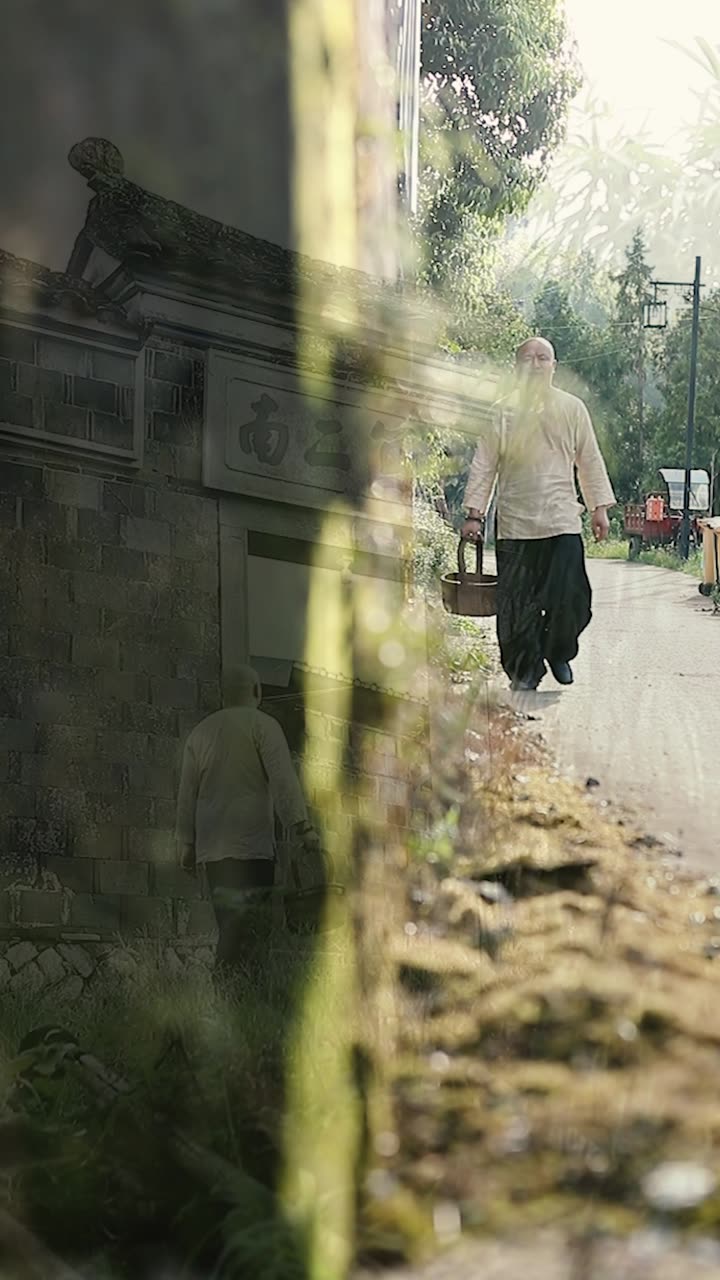
The gate at West Kun. The lintel reads 世笃二南.
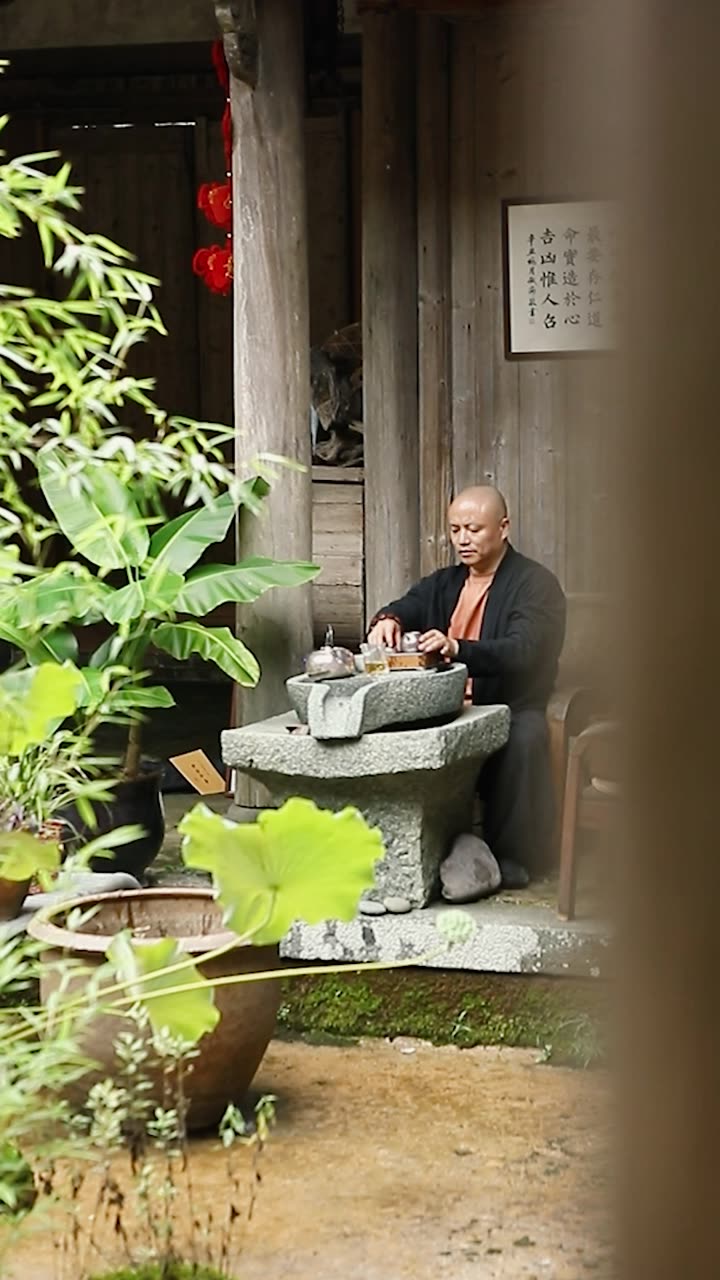
The old house.
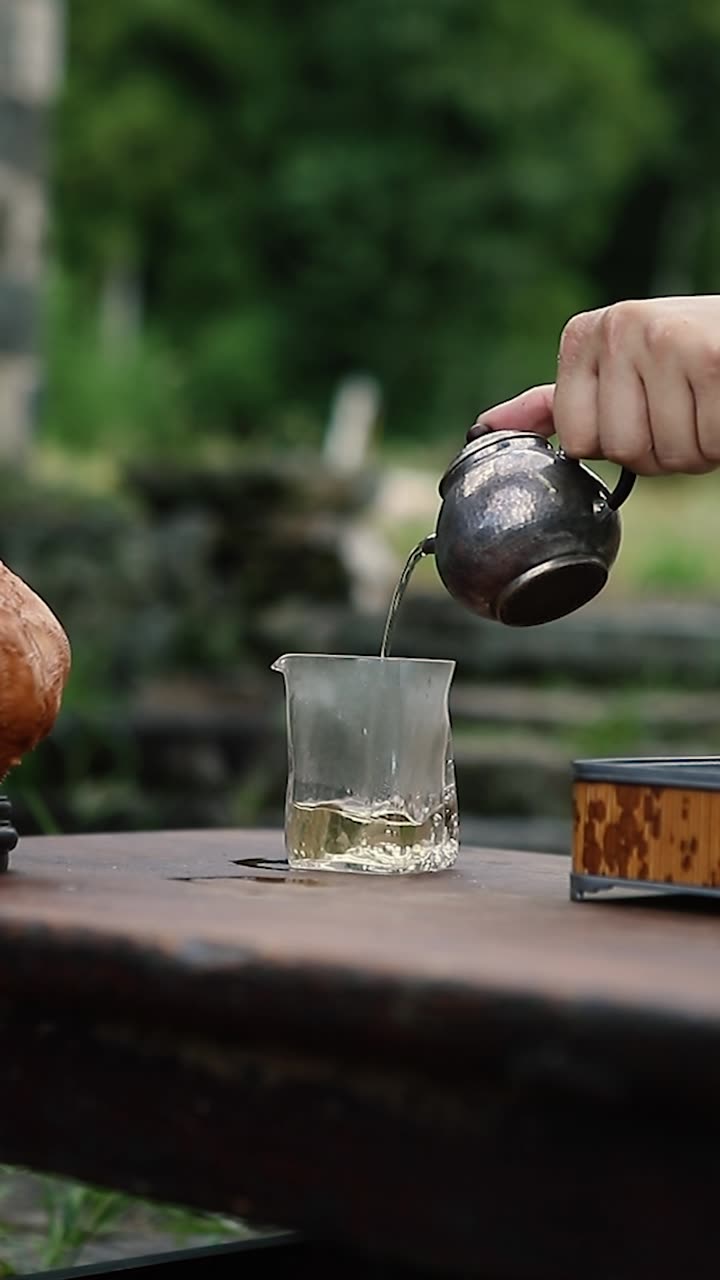
Tea by the fields.
“As a child, I watched my mother pay homage to the Buddha by the quiet glow of a lamp, while the sound of chanting drifted through the curtains.” At fifteen he encountered the Dharma and entered the Chan gate. For twenty years scripture was his constant companion — study, meditation, calligraphy, martial arts, and always tea. In time he came to serve as abbot of E’feng Temple in the mountains above Fuzhou. The teas he made and gathered in those years rested inside the temple, aging beside the sound of chanting.
“In the Chan master’s world, tea is the finger pointing directly at the mind.”


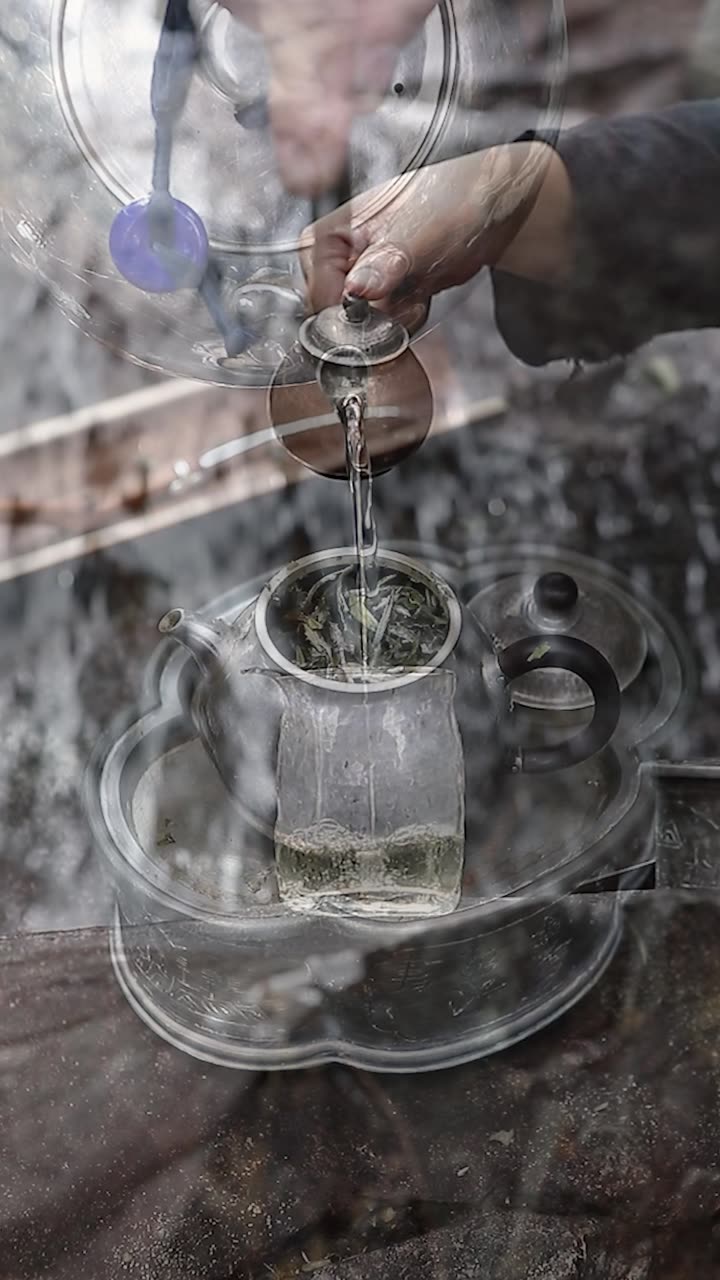
The waterfall below the temple mountain.
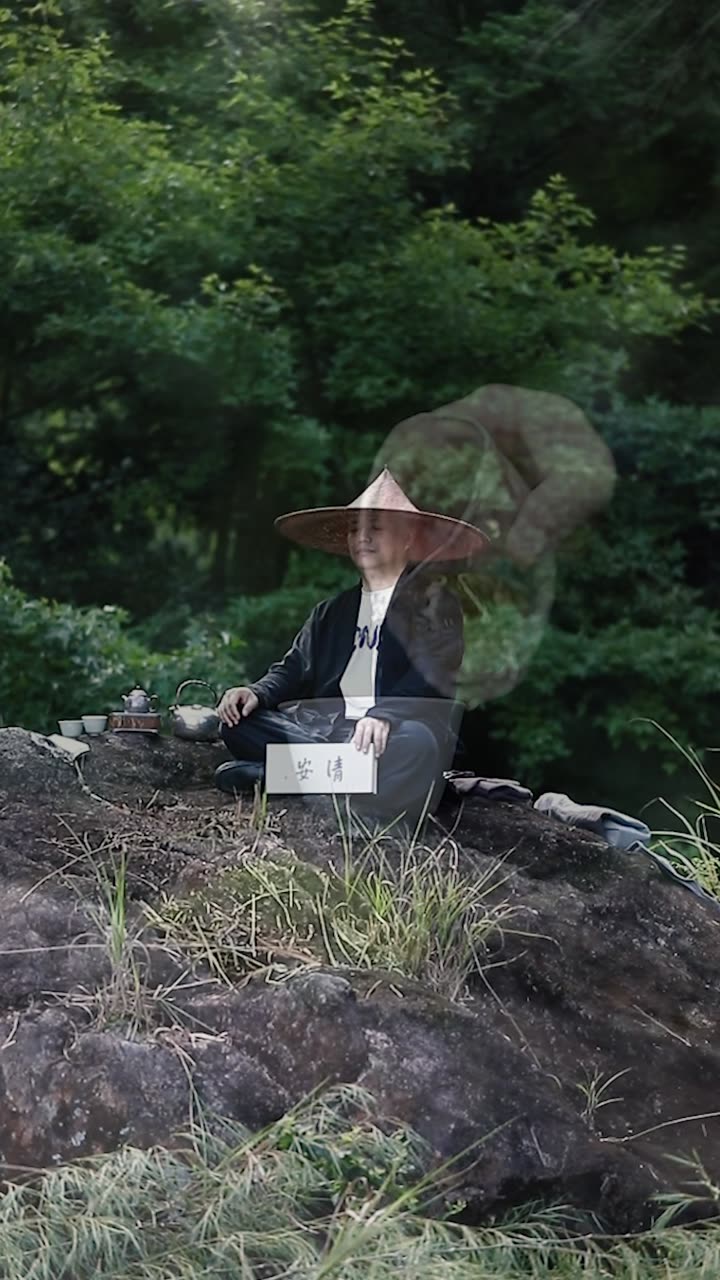
Water from the creek.
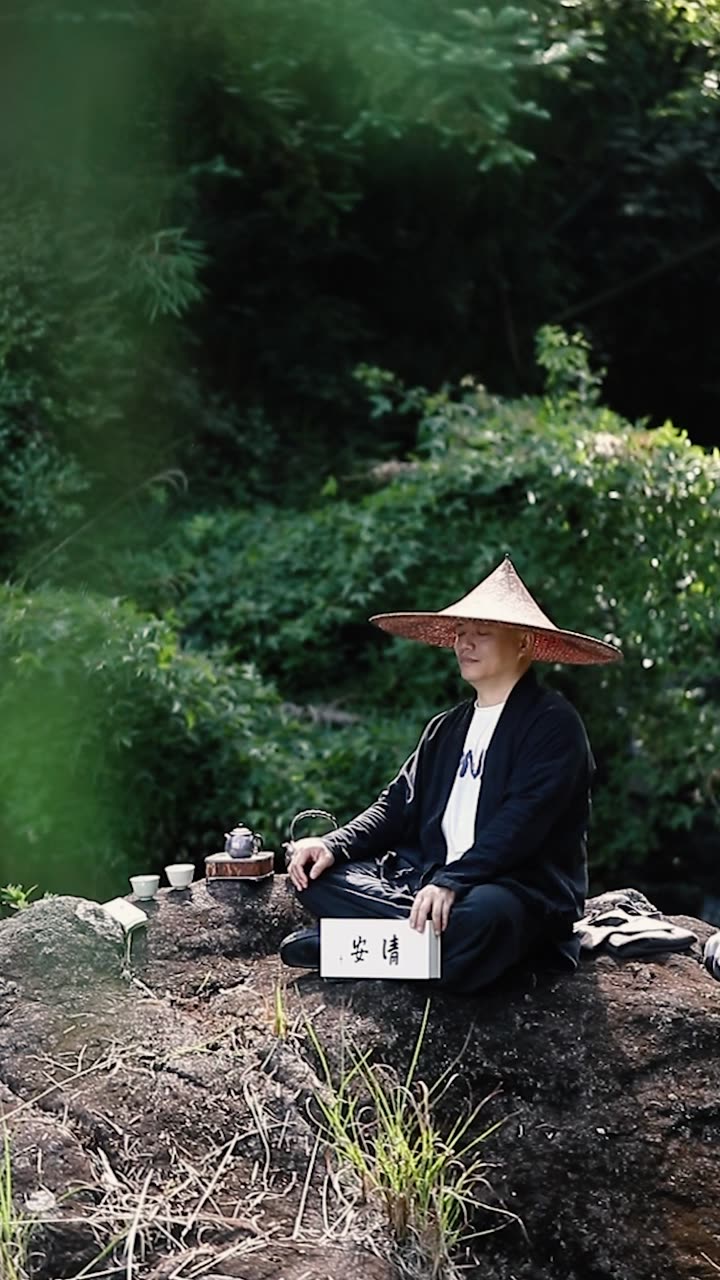
Tea by the creek.
In 2014 a tea seeker named Han Xue climbed E’feng Mountain looking for white tea that had not been made for the market. “Others came for business,” she said. “I came only for the white tea.” The tea he pressed that year — his last on the mountain — he named Snow Tea, for her.
“Yet it was there, in the deepest quiet, that a wish to return to the world arose. I took off my monastic robes and put on ordinary clothes. I married, raised a family, planted tea with my own hands.” Ernan White Tea (二南白茶) was founded that year. The monastery’s quiet and four generations of craft came down the mountain together.


With Shidi. “She is my colour; she is my light.”

In 2019 he carried the tea south, to a bamboo pavilion he designed himself in northern Thailand: a white tea and Chan arts house where the aged cakes are brewed, calligraphy is written, meditation is taught, and guests from every country sit at the same low table. “Some places, the moment you enter, you know: this is your practice ground. Chiang Mai is that for me.”
He now serves as President of the Thai-Chinese Education Development Association. In 2025 he presented his solo exhibition of calligraphy and painting, The Original Mind in Ink, at Rajamangala University of Technology Krungthep in Bangkok.


“Tea belongs to everyday life. Art is an expression of the true heart. Chan is the foundation beneath it all.” A day in either house still begins the same way: water on the fire, leaf in the bowl, the brush afterwards.


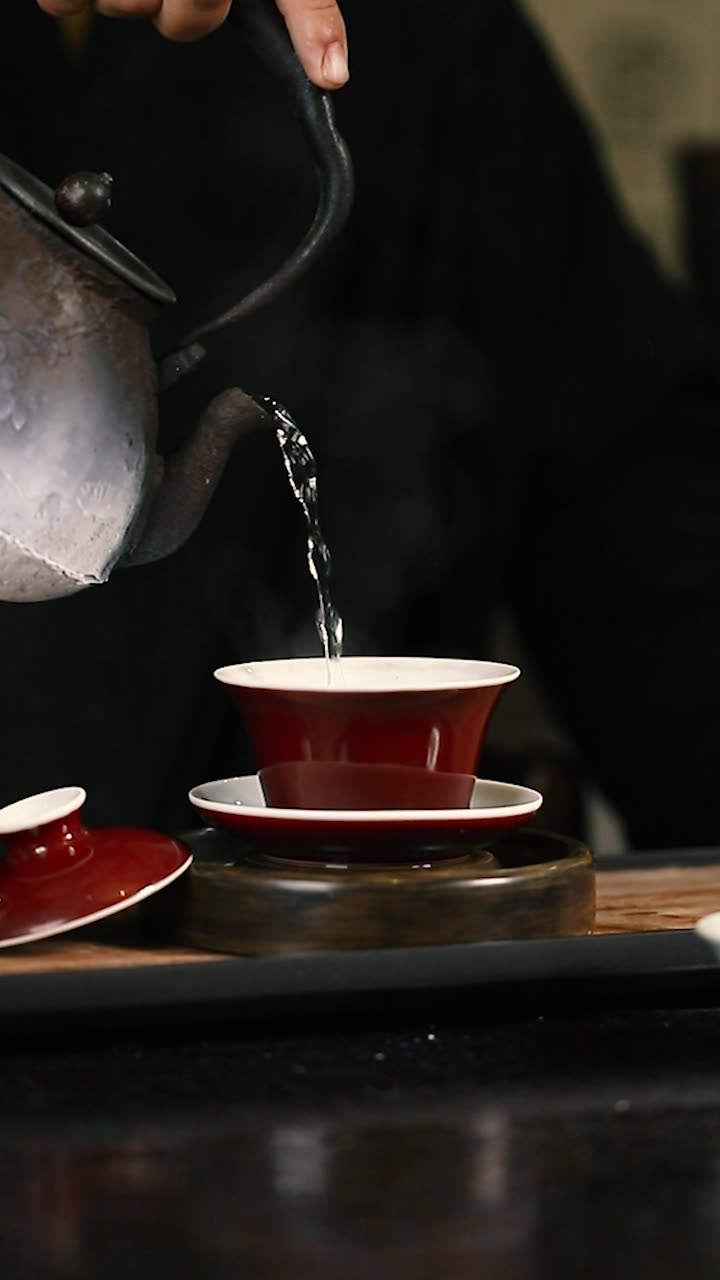
Evening, Chiang Mai.
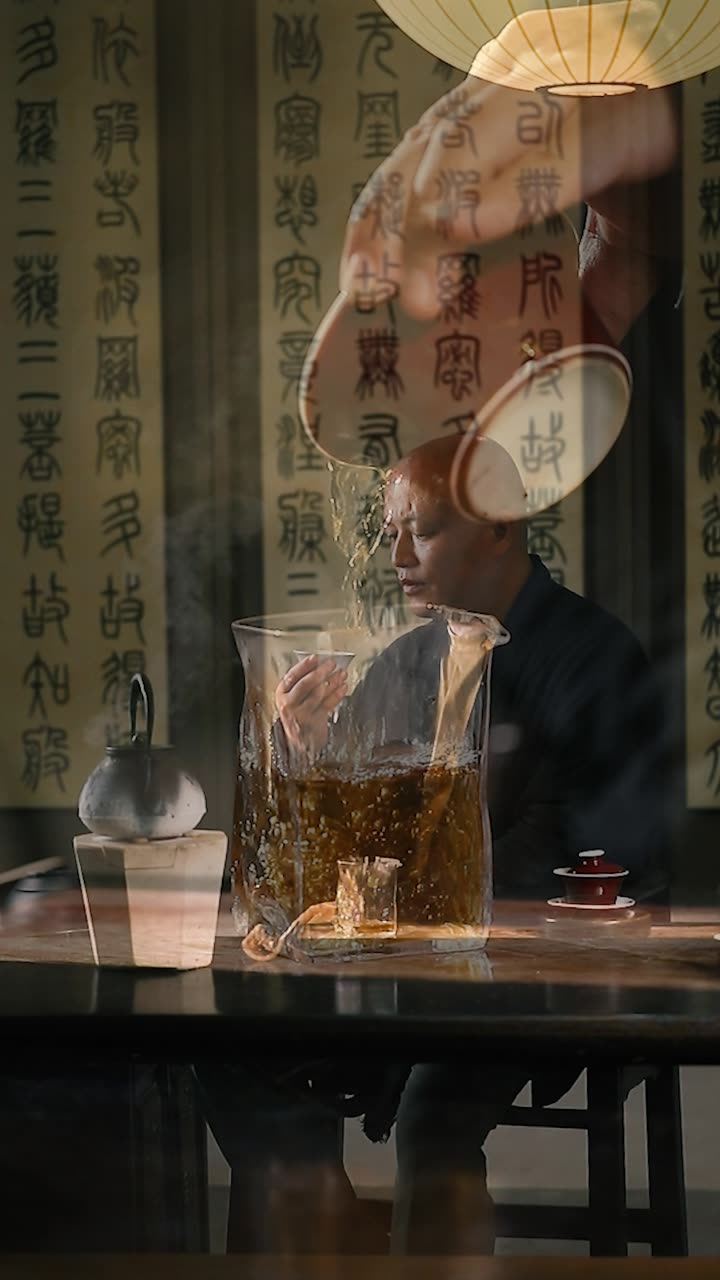
Beneath the calligraphy.
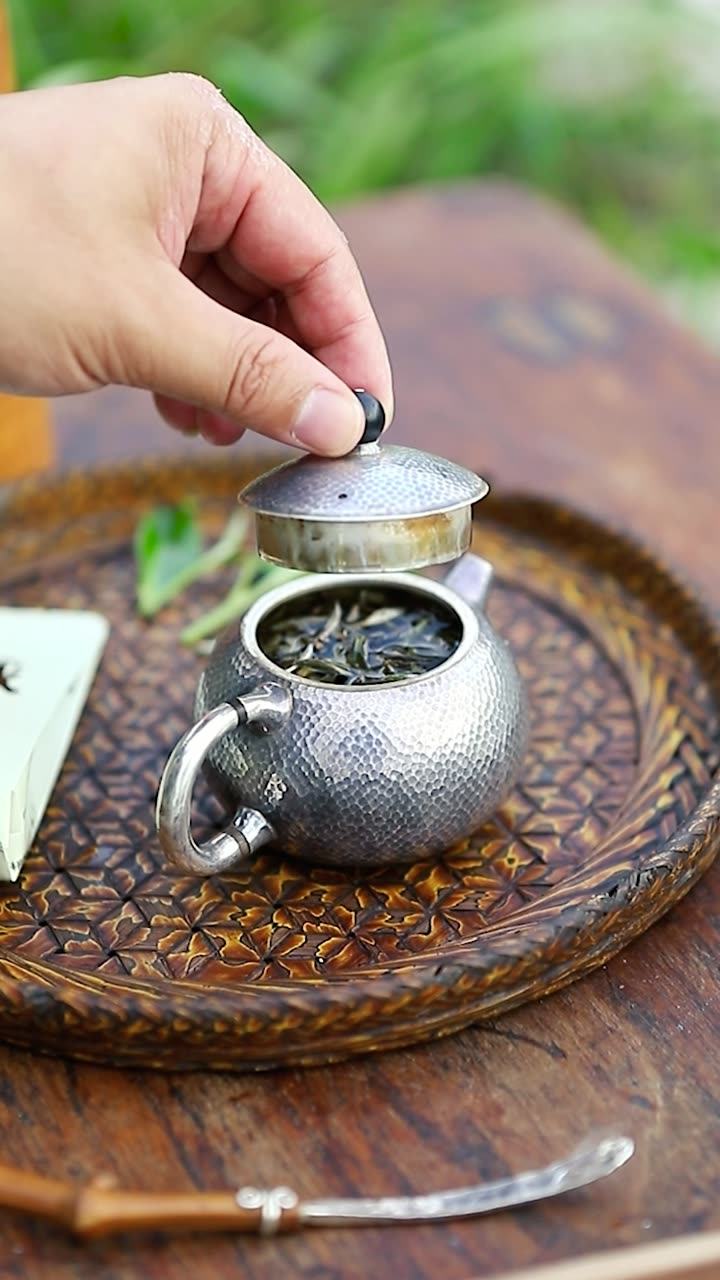
The silver kettle, in the fields.